Governance
UFIT Governance Structure
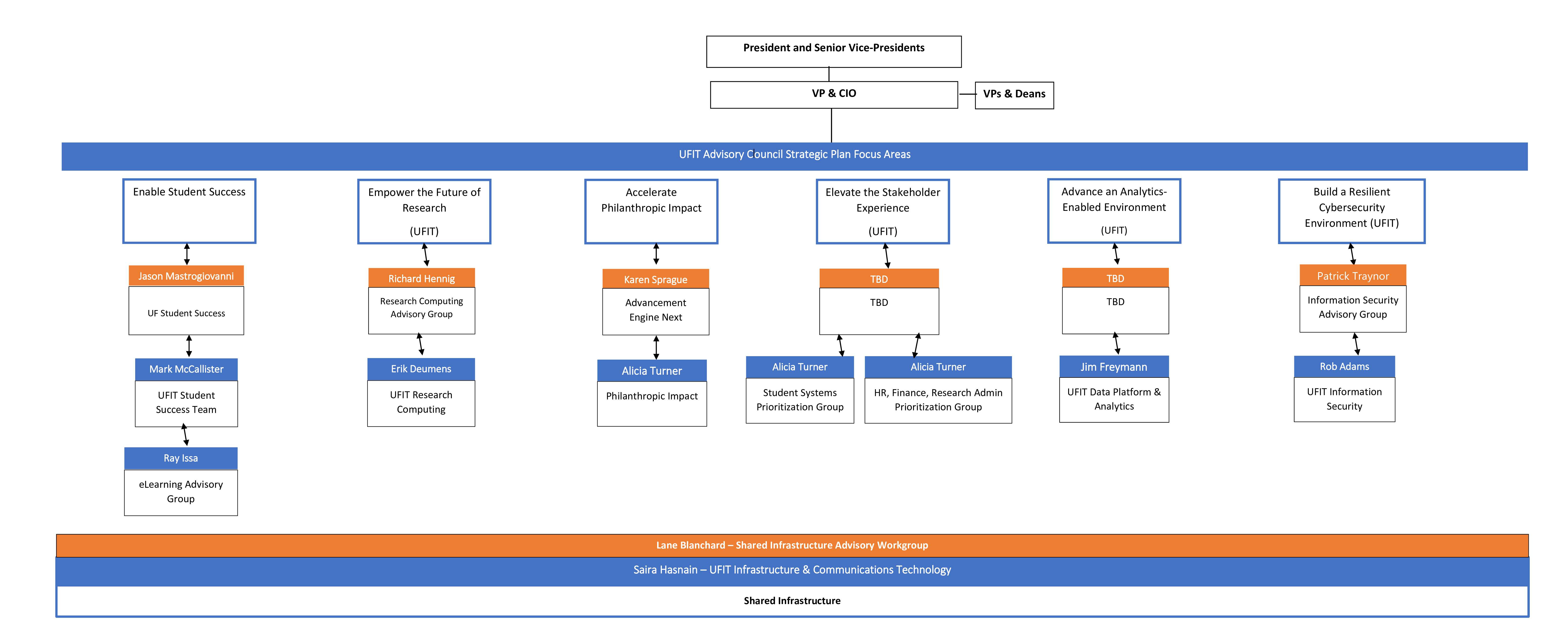
Download UFIT Governance Chart
UF Information Technology governance is a well-defined, transparent process. The governance committees assist with advising on policies, standards, and priorities in support of the university’s mission and business goals.
The UF-wide IT Governance structure includes the following components:
- The university's senior strategic IT committee is called OneIT. OneIT is comprised of deans and executives from across UF. The current membership is online.
- Unit IT Advisory/Coordination/Governance Workgroups to address local issues and provide representation to the Topical IT Advisory Workgroups.
- Six main Advisory Workgroups focusing on: Enable Student Success, Empower the Future, Accelerate Philanthropic Impact, Elevate Stakeholder Experience, Advance an Analytics Enabled Environment, Build a Resilient Cybersecurity Environment, and Shared Infrastructure.
- The President’s Cabinet approves UF-wide policies and standards, strategic UF-wide projects and associated budget, which requires a UF-wide financial commitment.
- The Office of the CIO.